
Online Financial Reporting Services in Saudi Arabia
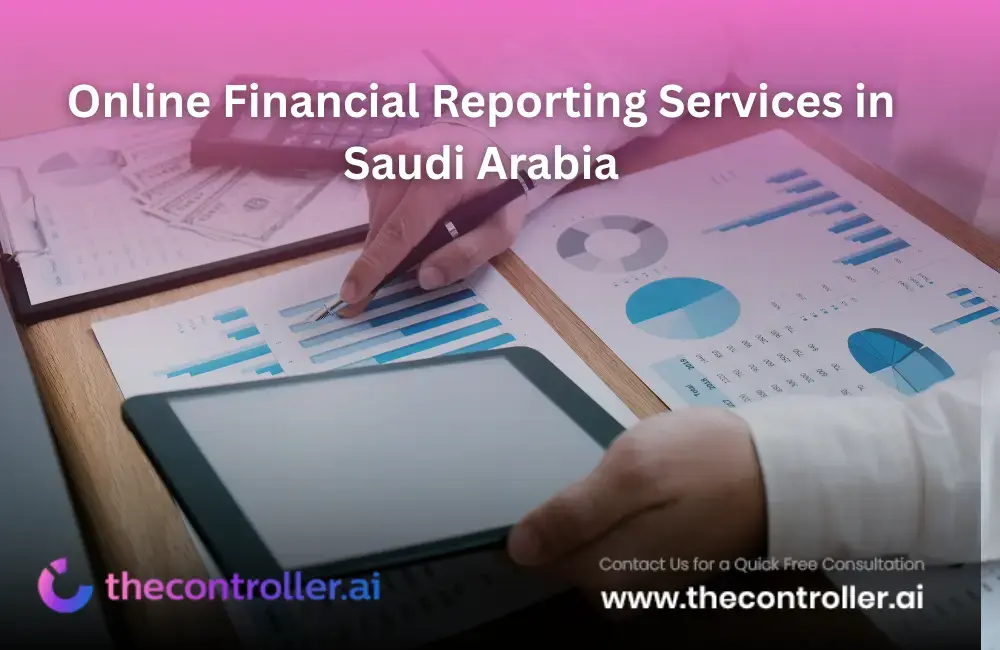
Online Financial Reporting Services in Saudi Arabia: Benefits, Compliance & Digital Reporting Guide
Mohammed Najab Sadique
03 May 2026
CA. Joffy Haneefa
For many years, businesses relied on static financial reports—prepared monthly or quarterly—to understand their performance. These reports were often delayed, manually compiled, and limited in scope. In today’s fast-moving business environment, that approach is no longer effective.
Companies in Saudi Arabia now operate in a landscape defined by increasing transaction volumes, regulatory oversight, and the need for quick, data-driven decisions. Management teams can no longer wait weeks for financial insights—they need visibility in real time.
This shift is closely tied to Saudi Arabia’s broader digital transformation under Vision 2030. Financial reporting is becoming more integrated, automated, and compliance-driven. Businesses are also aligning with global reporting standards such as IFRS, supported by local regulatory frameworks.
As a result, Online Financial Reporting Services in Saudi Arabia are becoming a critical part of modern financial management—helping businesses move from reactive reporting to proactive decision-making.
What Online Financial Reporting Means for Modern Businesses
Online financial reporting refers to generating, accessing, and analyzing financial reports through cloud-based systems rather than traditional manual methods.
In practical terms, this means:
- Financial data is recorded and updated continuously
- Reports are generated automatically based on real-time data
- Business owners and stakeholders can access reports remotely
- Dashboards provide instant insights into financial performance
Instead of waiting for end-of-month reports, businesses can now monitor their financial health at any moment.
This shift transforms reporting from a periodic activity into a continuous, real-time process.
Why Businesses Are Moving from Traditional Reporting to Online Systems
The transition to online reporting is driven by several operational and strategic challenges.
- Delayed Manual Reporting Cycles
Traditional reporting often involves collecting data from multiple sources, verifying it, and compiling reports manually. This leads to delays and outdated insights.
- Growing Transaction Complexity
As businesses scale, the volume and variety of transactions increase. Manual systems struggle to keep up with this complexity.
- Management’s Need for Real-Time Insights
Decision-makers need immediate access to accurate financial data to respond to market changes, control costs, and plan growth strategies.
- Increased Compliance Expectations
Regulators require accurate, well-documented, and timely financial reporting. Manual systems increase the risk of non-compliance.
Online reporting systems address these challenges by automating processes and providing real-time visibility.
How Online Financial Reporting Works
Online financial reporting operates through an integrated and automated workflow:
1. Transaction Data Captured Digitally
All financial transactions—sales, expenses, payments—are recorded in a centralized digital system.
2. Data Categorization
The system automatically classifies transactions into appropriate categories such as revenue, expenses, and liabilities.
3. Automated Report Generation
Based on the recorded data, financial reports are generated instantly without manual intervention.
4. Expert Review and Validation
Accountants review the data and reports to ensure accuracy and compliance with standards.
5. Dashboard Access
Reports are presented through interactive dashboards, allowing users to analyze performance easily.
This process ensures that financial data is always current, structured, and reliable.
Key Features of Online Financial Reporting Systems
- Real-Time Financial Dashboards
Dashboards provide a live overview of key financial metrics such as revenue, expenses, and profitability. This enables continuous monitoring rather than periodic review.
- Automated Report Generation
Reports are created automatically, reducing manual effort and ensuring consistency across reporting periods.
- Cloud-Based Access to Reports
Users can access financial reports from any location, supporting remote work and multi-location operations.
- Integrated Data from Multiple Sources
Online systems can integrate data from accounting software, banking platforms, and ERP systems, creating a unified financial view.
- Multi-Entity or Multi-Branch Reporting.
Businesses operating across multiple branches or entities can generate consolidated or segmented reports easily.
Core Financial Reports Generated Through Online Systems
Online reporting systems provide a comprehensive set of financial reports:
- Profit and Loss Reports
Show the company’s income, expenses, and overall profitability over a specific period.
- Balance Sheets
Provide a snapshot of assets, liabilities, and equity, reflecting the financial position of the business.
- Cash Flow Statements
Track cash inflows and outflows, helping businesses manage liquidity effectively.
- Management and Performance Reports
Offer detailed insights into business operations, including cost analysis, departmental performance, and growth trends.
These reports form the backbone of financial analysis and strategic planning.
Benefits of Online Financial Reporting for Businesses
- Faster Access to Financial Insights
Businesses no longer need to wait for reports—they can access data instantly.
- Improved Reporting Accuracy
Automation minimizes human errors and ensures consistent data handling.
- Better Decision Support
Real-time insights allow management to make timely and informed decisions.
- Reduced Manual Effort
Automated processes free up time for finance teams to focus on analysis rather than data entry.
- Stronger Financial Visibility
Clear and structured reports provide a complete understanding of business performance.
Online reporting transforms financial data into actionable insights.
Challenges with Traditional Financial Reporting Methods
Traditional reporting methods often create inefficiencies:
- Reports are delayed and outdated
- Heavy reliance on spreadsheets increases complexity
- Data is fragmented across multiple systems
- Manual processes increase the risk of errors
These limitations hinder effective financial management.
Online Financial Reporting and Compliance in Saudi Arabia
Compliance plays a central role in financial reporting.
- IFRS Reporting Alignment
Businesses must align their reporting with international standards, ensuring consistency and transparency. - SOCPA Framework
The Saudi Organization for Chartered and Professional Accountants (SOCPA) regulates accounting practices and ensures proper implementation of standards. - ZATCA-Related Reporting Considerations
Businesses must maintain accurate financial records to meet tax and reporting requirements. - Audit-Readiness Support
Well-organized digital reports make audits more efficient and less stressful.
SOCPA continues to refine IFRS implementation, making structured digital reporting increasingly important.
How Online Reporting Supports Better Decision-Making
- Online reporting enhances decision-making by providing:
- Real-time visibility into financial performance
- Accurate data for forecasting and budgeting
- Continuous monitoring of key metrics
- Quick identification of financial issues
This allows businesses to respond proactively rather than reactively.
The Role of Automation and Technology in Financial Reporting
Technology is reshaping financial reporting in Saudi Arabia:
- Automated reporting tools eliminate repetitive tasks
- Cloud accounting integrations centralize financial data
- AI-supported analysis provides deeper insights
- ERP-connected systems integrate reporting across departments
ERP-driven reporting is becoming increasingly common, enabling seamless data flow and better control.
Common Challenges Businesses Face Without Online Reporting Systems
Without digital systems, businesses often face:
- Outdated financial information
- Limited visibility into operations
- Increased compliance pressure
- Slow and inefficient reporting cycles
These challenges can affect both operational efficiency and strategic planning.
When Businesses Should Shift to Online Financial Reporting
Businesses should consider transitioning when:
- Experiencing rapid growth
- Managing complex financial structures
- Expanding across multiple locations
- Preparing for audits or investor reporting
Early adoption ensures smoother processes and better financial control.
What to Look for in an Online Financial Reporting Solution
When choosing a solution, businesses should evaluate:
- Automation capabilities
- Flexibility in report customization
- Compliance with local regulations
- Scalability for future growth
- Strong data security measures
A well-chosen system supports both current needs and long-term expansion.
Future Trends in Online Financial Reporting in Saudi Arabia
The future of financial reporting is evolving rapidly:
- Increased automation across reporting processes
- AI-driven insights and predictive analytics
- Integration of compliance reporting within systems
- Development of real-time financial ecosystems
Businesses that adopt these trends early will gain a significant competitive advantage.
Conclusion
Online financial reporting is no longer just about generating reports—it is about gaining control over financial performance and decision-making.
By adopting Online Financial Reporting Services in Saudi Arabia, businesses can achieve:
- Faster and more accurate reporting
- Real-time visibility into financial data
- Strong compliance with regulatory requirements
In an increasingly digital and regulated environment, online reporting provides the clarity, speed, and control needed for sustainable business success